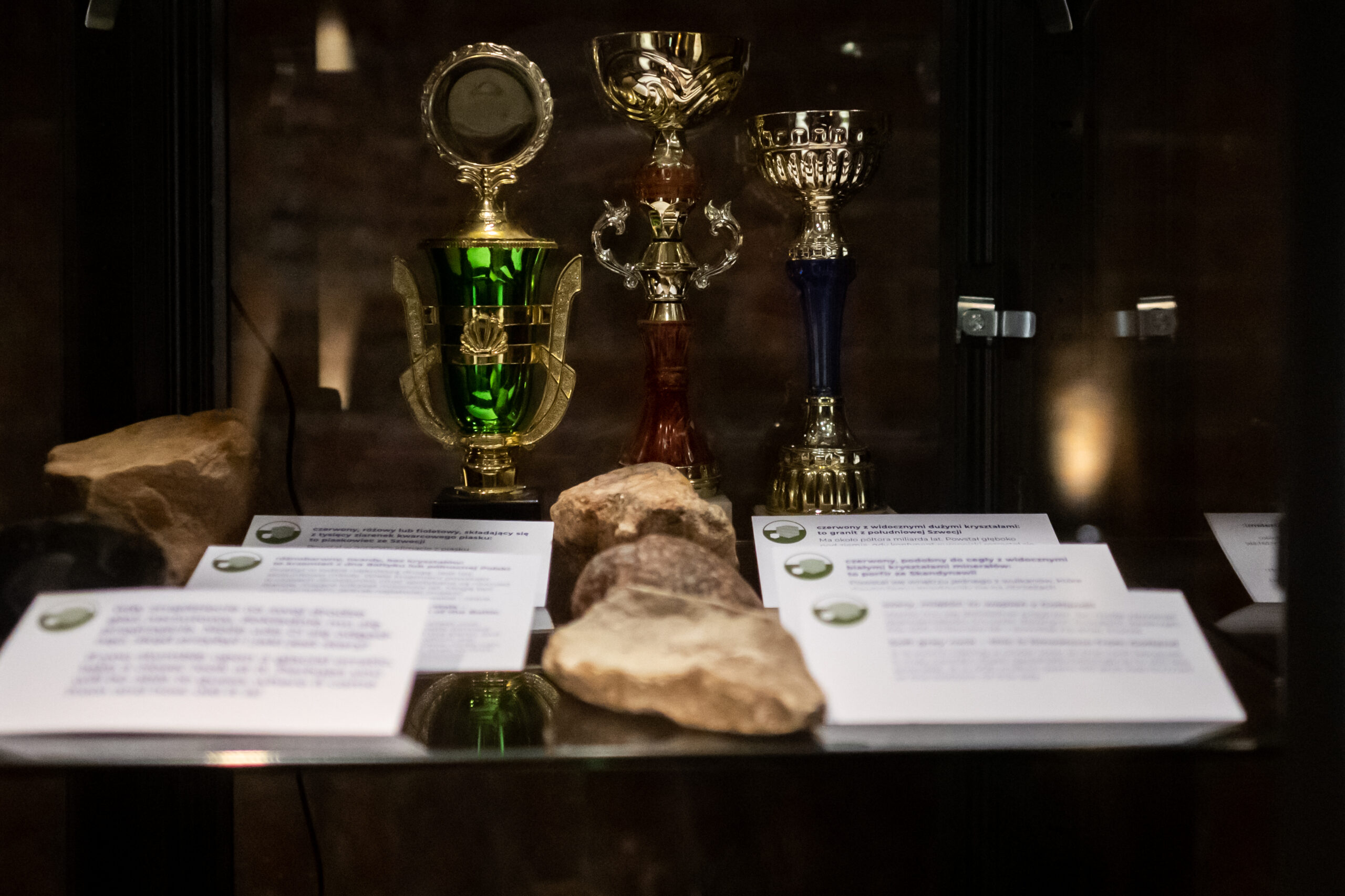
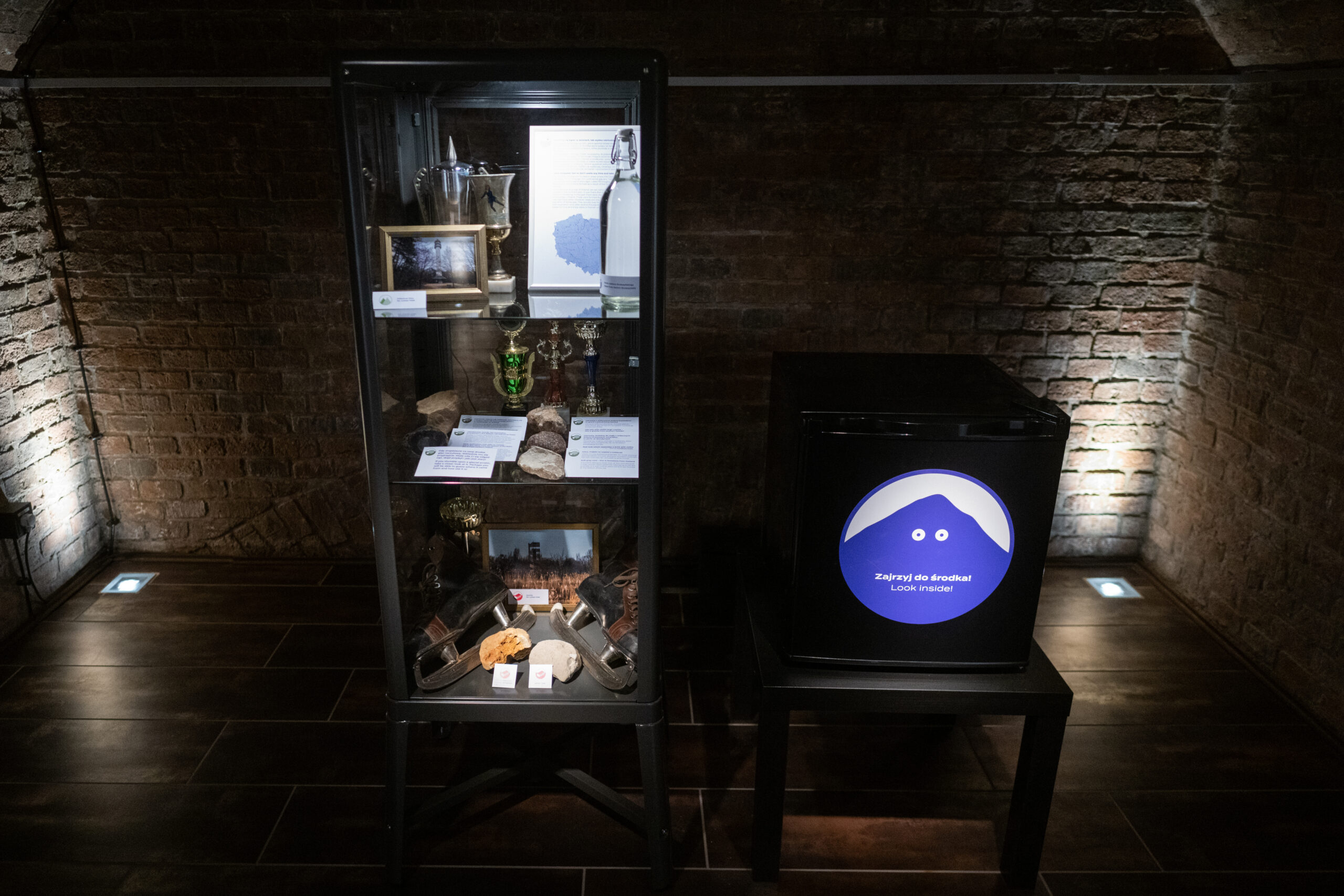
If you stumble upon a glacial erratic, take a closer look at it. Perhaps you will be able to guess where it came from and how old it is!
- red rock with visible large crystals – this is granite from southern Sweden
It is about 1,5 billion years old. It was formed deep underneath the surface of the earth when the European continent was growing towards Poland.
- Red rock which resembles a brick with visible white mineral crystals – this is porphyry from Scandinavia
It was formed inside one of the volcanoes which a long time ago were located on Europe’s periphery, while the continent was being formed.
- Red, pink or purple rock made of thousands of grains of quartz sand – this is sandstone from Sweden
It was formed in a hot climate from sand carried by rivers and seas. Most of the rocks are over a billion years old.
- Soft grey rock – this is limestone from Gotland
It is worth taking a closer look at this rock because it may contain fossil (seashells belonging to old sea animals). It is 400 million years old and was formed at the bottom of the sea.
- Hard, multicolour rock with no crystals – this is flint either from the bottom of the Baltic
Sea or from northern Poland
Its journey inside the ice was the shortest one. It is also rather “young”. Flint was mostly formed in the times when dinosaurs walked the Earth, but there are also some older examples which are several hundred millions years old. These rocks can have different colours but the easiest ones to find are black, red, blue and grey.