Emancipation movements in the 19th century
The 19th century was the time when people began to pay attention to the problem of unequal treatment of men and women. The issues of women being deprived of their full rights and having only little access to power were raised. Many organised movements, fighting for the recognition of women as fully-fledged participants of social life, began to emerge. More and more women wanted to decide not only about their own lives but also about the future of the communities in which they were living.
Women suffered from economic discrimination resulting from not being allowed to enter many professions and careers. People began to notice that this situation led to the complete dependency of women on men. It was also pointed out that women had limited opportunities to receive education and were deprived of political rights.
The attitude towards female workers began to change in the 19th century. The developing market economy had been employing women as cheap labour for a long time. Slowly but surely, however, women began to take up also lower clerk positions and work at post offices. Many upper-class girls began to feel the need for intellectual development.
In the 1880s the sight of women studying at universities slowly ceased to surprise anyone. This led to intensified demands for the emancipation of women in education and science. Women’s rights movements ran an effective campaign for opening universities to women. They also demanded establishing gymnasiums for girls with a compulsory school-leaving exam, which would prepare them for higher education.
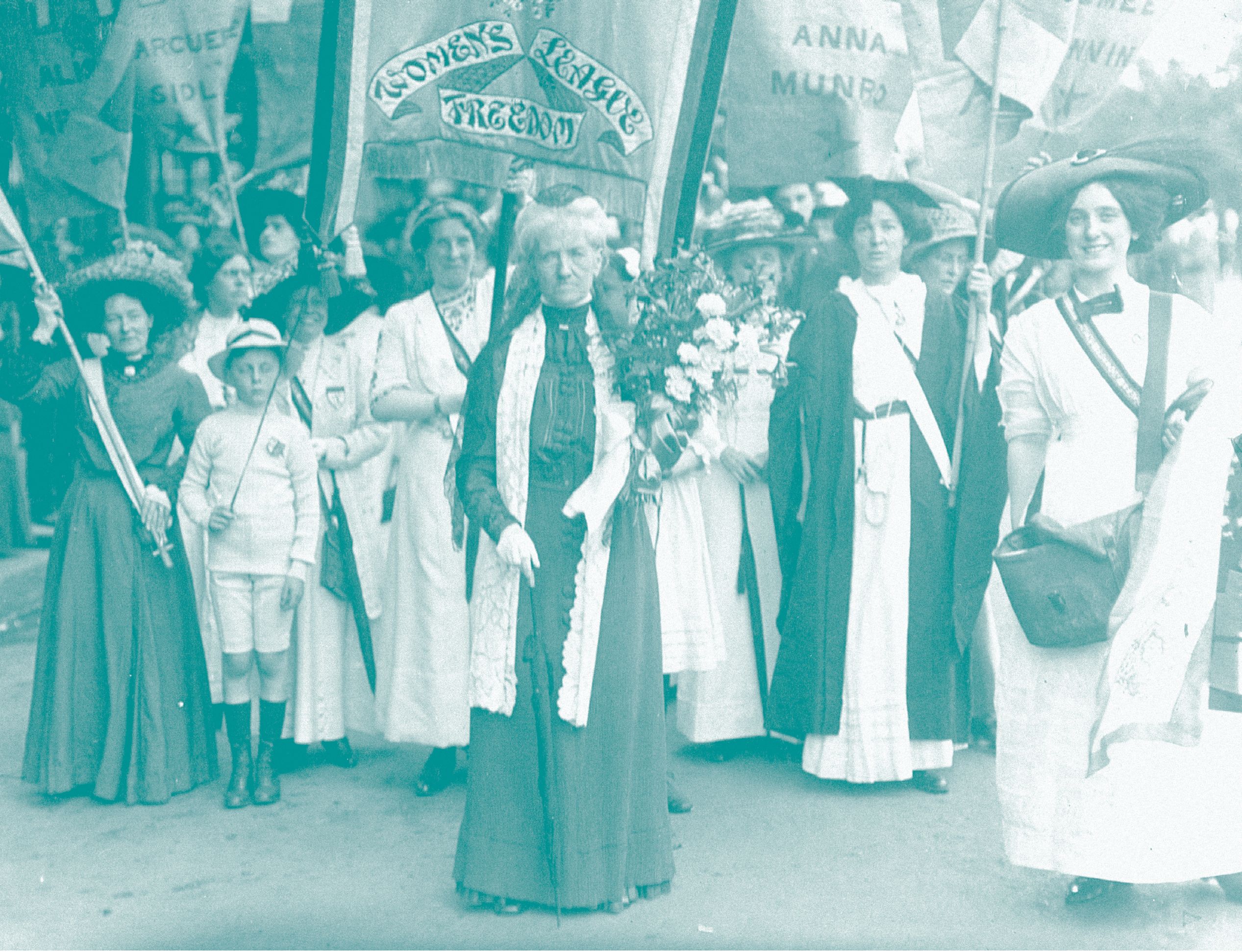
Photo:
Protest march of the Women’s Freedom League in Great Britain, c. 1911, photo from Wikimedia Commons’ collection